Adam
Adam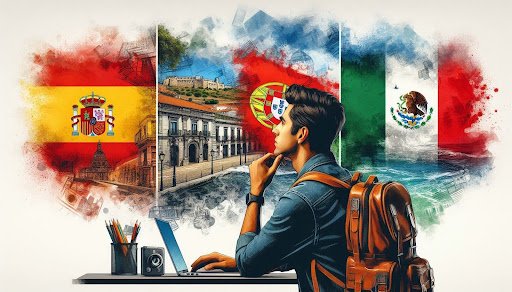
Established communities, coworking infrastructure and lifestyle appeal continue to keep these countries near the top of nomad wish lists.
WASHINGTON, DC, April 4, 2026.
The digital nomad hubs map in 2026 is crowded with contenders. Governments from Asia to Europe are pitching remote workers with fresh visa categories, better branding, and promises of easier living. Yet even with more countries competing, three names keep holding their ground near the top of the list: Portugal, Spain, and Mexico. That is not an accident. These countries did not just get early attention. They built momentum, community, and enough everyday usability that remote workers still see them as safer bets than newer, flashier alternatives.
That matters because the digital nomad market is getting less forgiving. A few years ago, a place could get attention for being cheap, sunny, and photogenic. In 2026, remote workers want more than a backdrop. They want legal clarity, decent internet, real housing options, social life, time-zone logic, healthcare access, and enough infrastructure that the lifestyle still works once the honeymoon phase fades. Portugal, Spain, and Mexico each solve that puzzle differently, but all three keep landing near the top because they make nomad life feel more livable than experimental.
How Portugal still wins in digital nomad Hubs by making remote life feel small, manageable, and civilized.
Portugal remains one of the easiest places to understand emotionally and practically, especially for workers coming from North America or the UK. The country is not just attractive because of its climate and coastline. It works because it feels navigable. Lisbon and Porto have matured remote-worker ecosystems. Smaller cities and secondary coastal hubs now have enough coworking, furnished rentals, and international networks to support medium-term stays without making life feel isolated or chaotic.
Portugal’s other advantage is that the lifestyle there has been formalized rather than left in a gray zone. The country’s own national visa portal explicitly includes a remote work and digital nomad pathway, which helps explain why so many workers still see Portugal as a serious base rather than just a nice stop. That kind of legal structure matters more in 2026 than it did in the early remote-work wave. The workers staying longest are not just chasing vibes. They are looking for places where residency, banking, housing, and routine can fit together without too much improvisation.
Portugal also benefits from scale. It is large enough to give nomads variety, city life in Lisbon, a more grounded urban rhythm in Porto, slower coastal living in the Algarve, or less obvious secondary cities, but small enough that movement inside the country does not feel exhausting. That makes it especially attractive to workers who want Europe without feeling scattered. You can change pace without changing systems.
The downside is obvious, too. Portugal is no longer a secret and no longer especially cheap in its most desirable districts. Housing pressure is real. Lisbon in particular has become harder for locals and more expensive for outsiders than the old nomad fantasy still suggests. But that has not knocked Portugal off the top tier. It has only changed the profile of the worker who thrives there. In 2026, Portugal remains a strong choice for remote professionals who want structure, beauty, and relative ease, and who can tolerate rising costs in exchange for daily quality of life.
Spain stays near the top in digital nomad Hubs 2026 because it offers the most complete big-country package in Europe.
If Portugal feels compact and elegant, Spain feels expansive and versatile. It remains one of the strongest digital nomad hubs countries in the world because it offers multiple versions of the lifestyle inside one national framework. Barcelona attracts workers who want density, international energy, and a large existing remote scene. Madrid appeals to professionals who want a more business-facing capital with strong transport links and city infrastructure. Valencia, Malaga, Seville, and the islands give nomads different balances of cost, climate, and intensity.
That variety is one of Spain’s biggest strengths. A remote worker can come from one city and stay in the country. The rail network helps. The domestic travel culture helps. The everyday infrastructure helps. Spain often feels less like a single nomad hub and more like a full operating system for mobile professionals.
The legal pathway also adds serious weight. Spain’s official international teleworking residency framework makes clear that non-EU foreigners can apply to live and work remotely under a formal authorization, with a one-year permit from abroad and longer residence authorization in eligible cases. That matters because Spain is not just passively popular. It is actively competing. The country has made a deliberate decision to treat remote workers as a category worth structuring around.
Spain also has one of the strongest lifestyle arguments of the three countries. Food, weather, walkability, late social culture, public life, and internal transport all help make the lifestyle feel rewarding outside working hours. That may sound secondary, but it is not. Remote workers often stay where ordinary life feels easiest to enjoy. Spain remains powerful on that front because it offers not just beautiful weeks, but very livable months.
Still, Spain carries some of the same tensions seen elsewhere. Housing pressure, neighborhood backlash, and tourism fatigue have become harder to ignore in several cities. Remote workers arriving in 2026 are walking into places where locals are increasingly vocal about affordability and short-term rental pressure. But Spain remains near the top because even with those tensions, the country still offers one of the deepest combinations of infrastructure, climate, social life, and legal clarity available anywhere in Europe.
Mexico keeps winning in 2026 because it offers proximity, time-zone logic, and real life, not just remote-work fantasy.
Mexico’s position is different from Portugal’s and Spain’s, but just as durable. For North American workers in particular, Mexico remains one of the most practical digital nomad bases in the world. The time-zone advantage alone is enormous. Remote employees and freelancers serving U.S. or Canadian clients can live abroad without destroying their schedule. That removes one of the highest hidden costs of long-term nomad life, working strange hours just to preserve a distant income stream.
Mexico also delivers a form of daily livability that many remote workers find immediately compelling. Big-city culture in Mexico City, beach options, strong food culture, lower everyday costs than major U.S. cities, and a well-established expat and nomad presence all help explain why demand has stayed high. It is one of the few destinations where a worker can feel truly abroad while still maintaining a relatively normal North American work rhythm.
Mexico does not market itself with the same single-brand nomad identity as Portugal or Spain, but it still offers practical pathways for longer stays through its temporary resident structure. That has helped make Mexico less of a short visit and more of a repeat base for workers who want flexibility without the transatlantic reset.
Its strengths are also visible in the backlash. Last year, AP reported on Mexico City’s anti-gentrification protests and the government response, underscoring how rising housing demand and the influx of temporary foreign residents have become politically charged in neighborhoods such as Condesa and Roma. That story is important because it shows just how central Mexico has become to the global nomad economy. Countries do not get that kind of tension unless the demand is real.
Mexico’s appeal in 2026 is therefore both obvious and complicated. It offers culture, cost relief, climate variety, time-zone convenience, and a huge existing community. It also increasingly forces remote workers to confront the social impact of that popularity. But the pressure has not pushed Mexico off the list. If anything, it confirms how important it has become.
What these three countries share is not hype, but friction reduction in digital nomad Hubs 2026.
This is the real reason Portugal, Spain, and Mexico remain near the top even as more countries chase the same audience. All three reduce friction in ways workers actually feel. Portugal reduces emotional and administrative clutter. Spain reduces uncertainty by offering scale and structure. Mexico reduces time-zone pain and lifestyle strain for North Americans. None is perfect. All are under pressure. But each still gives remote workers something newer destinations often fail to deliver: the ability to imagine not just arriving, but staying functional.
Established communities matter too. A place with years of nomadic traffic has more than coworking spaces. It has informal knowledge. Good neighborhoods become easier to identify. Reliable landlords get talked about. Telegram and WhatsApp groups fill in local gaps. Repeat visitors create a sense that you are not entering from scratch. That social layer matters far more than most glossy rankings admit.
There is also a bigger mobility angle emerging beneath the surface. For some long-term remote professionals, choosing a nomad hub is no longer only about rent and weather. It is becoming part of a broader location strategy, where they can stay longer, move more easily, and build optionality into their life. That is one reason some internationally mobile workers eventually drift toward wider planning around residency, travel flexibility, and second citizenship, a conversation reflected in services such as Amicus International Consulting’s global mobility and second-passport work. Not every nomad is thinking that far ahead, but more of them are than they were in 2021.
That tells you something important about 2026. Portugal, Spain, and Mexico are not leading because people have not heard of newer alternatives. They are still leading because they keep solving the real-world problems behind remote living. Good countries for digital nomads are not just destinations. They are systems. And even with demand rising, rent pressure building, and politics getting louder, these three still offer enough structure, community, and lifestyle advantage to stay near the top of the global list.