Adam
Adam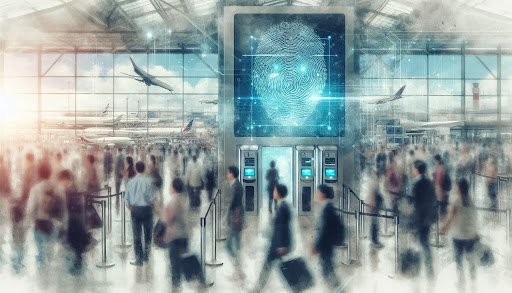
Fraud networks continue adapting to stronger border technology and tighter screening rules.
WASHINGTON, DC, April 9, 2026.
Biometrics were supposed to make fake passports and fraudulent travel documents much harder to use. In important ways, they have. Facial comparison, fingerprint capture, and linked travel records have made it more difficult for an imposter to rely on a simple lookalike document and move through the system unnoticed. But in 2026, fake passports and document fraud are still thriving because criminal networks have not stood still. They adapted.
That is the central reality now confronting border agencies, airlines, financial institutions, and investigators. Stronger technology raised the cost of travel document fraud, but it did not eliminate the business. Instead, it pushed fraud networks to become more selective, more specialized, and more creative. Rather than relying only on crude counterfeits, they increasingly mix forged records, fraudulently obtained genuine documents, impostor use, breeder-document fraud, and digital manipulation to stay one step ahead of the controls.
The result is a paradox. Border security has become more technologically sophisticated at the same time that travel document fraud has become more layered. The passport itself may contain more protections than before, but the wider identity chain around it is still vulnerable.
Biometrics made old passport fraud harder, not impossible.
The strongest recent example of how much border controls have changed can be seen in Europe’s new biometric entry system. As Reuters reported when explaining the rollout of the EU’s Entry/Exit System, non-EU travelers entering the Schengen area are now being linked to fingerprints and facial images, with the system designed to connect the travel document more directly to the traveler’s identity. That is a major upgrade from the older model of manual passport stamping.
The logic is clear. If the person and the document are bound together through biometrics, impostor travel should become much riskier. Border officials can stop focusing only on whether the passport looks genuine and ask whether the person in front of them is truly the rightful holder.
That is real progress. But it solves only one part of the problem.
Criminal groups have responded by shifting away from the simplest frauds and toward methods that attack weaker points in the process. If a low-grade counterfeit is more likely to fail, they look for fraudulently obtained genuine documents. If a facial check is stronger, they look for lookalikes, morphing techniques, corrupted supporting records, or opportunities earlier in the document issuance chain. If border scrutiny rises, they exploit non-border uses of travel documents in banking, telecom registration, account opening, and wider identity fraud.
The document is only as strong as the identity behind it.
This is where public understanding often lags behind reality. People tend to think of fake passport fraud as a printing problem, as if the issue is simply whether a criminal can replicate a security feature or embed a believable chip. In 2026, the larger danger is often upstream.
A passport becomes powerful because other records support it. Birth certificates, citizenship records, name histories, civil registry documents, national ID systems, and application files all help create the appearance of legitimacy. If those feeder systems are compromised, a document can be genuine in form while fraudulent in origin.
Interpol has been unusually direct about that. Its travel-document fraud guidance notes that criminals use not only counterfeits and forgeries, but also fraudulently obtained genuine documents and genuine documents misused by impostors. That distinction matters. It means the fraud problem did not disappear just because passports became harder to copy. Criminals can simply move higher up the chain and attack the issuance process itself, or the identity history used to justify it.
That is why fake-passport enforcement in 2026 increasingly overlaps with identity fraud, not just border fraud. The issue is not always whether the passport is fake in the obvious sense. The issue is whether the identity behind it was lawfully created, lawfully documented, and lawfully used.
Fraud networks adapt by dividing the work.
Modern passport and travel-document fraud also survives because it no longer depends on one skilled forger doing everything. The business has become modular.
One actor may supply stolen personal data. Another may create or alter breeder documents. Another may source a genuine document under false pretenses. Another may provide a manipulated image file for remote verification. Another may coach the traveler, move money, or arrange the route. Each specialist handles one piece, making the overall operation harder to detect and easier to rebuild when one part is disrupted.
That fragmentation is a major reason stronger biometrics have not ended the market. Border technology can catch some bad actors at the point of crossing, but fraud networks now work across a much longer sequence, from data theft and civil-record manipulation to document issuance, impostor use, and post-arrival monetization.
In other words, the passport itself is no longer the whole story. It is one node in a larger criminal workflow.
Biometric checks are powerful, but they are not universal.
Another reason fake travel documents still thrive is that biometric protection is uneven. Not every border crossing has the same hardware, staffing, databases or real-time access. Not every country uses the same standards. Not every checkpoint can perform the same depth of verification under time pressure. And not every use of a passport happens in a high-security border environment.
That last point is especially important. Passports are often used outside immigration control, in hotel check-ins, account onboarding, payment verification, telecom registration, property rentals, and other commercial settings where staff may be rushed, training may be limited, and biometric cross-checks may not exist at all. A passport that might struggle under forensic scrutiny at a major airport could still work as a trust document elsewhere.
That creates room for fraud networks. They do not always need the document to survive the toughest possible inspection. They only need it to survive the inspection in front of them.
The United States has made clear why biometrics matter at the frontier. U.S. Customs and Border Protection says its facial biometric systems are used to verify identities and enhance traveler security. But even that official logic points to the larger problem. Biometrics enhance security, but they do not magically cleanse the upstream identity system or prevent every misuse of a document beyond the border.
Digital manipulation is now part of travel-document fraud.
Travel-document crime in 2026 also looks more digital than many people assume. A criminal does not always need a perfect physical counterfeit in hand. In some cases, they need a strong-enough image for online submission, a manipulated scan for remote onboarding, or a convincing document package to support a visa, account, or travel-related process before the actual trip.
This is one reason fraud has become harder to classify neatly. It is no longer just passport fraud, identity fraud, or cyber fraud. It is often all three at once. A stolen identity may support a fraudulently obtained passport. A forged breeder document may support a real application. A manipulated passport image may support financial fraud rather than international travel. The same travel document can have value at the border and far beyond it.
That overlap also makes enforcement harder. Agencies may still be organized in separate lanes, border control, financial crime, cybercrime, registry fraud, while the criminal network treats the identity chain as one continuous opportunity.
Genuine documents obtained by fraud are often more dangerous than obvious fakes.
The most effective fraudsters increasingly understand that the best fake passport may be a real one obtained under false circumstances. A genuine document backed by a corrupted identity history is often far more useful than a visible counterfeit because it can survive more systems, attract less suspicion, and generate new downstream records.
That is why breeder documents remain so important. If a fraudulent birth record, citizenship claim, residency trail, or name history can be accepted, the resulting passport may look entirely legitimate to a casual or even trained observer.
This is also where lawful identity change must be clearly separated from criminal identity fraud. A legal name change or identity restructuring process takes place under formal legal rules and cannot lawfully be used to escape criminal, civil, or financial obligations. Material published by Amicus International Consulting on lawful name changes and legal identity updates makes that distinction explicit. That line matters because fraud networks benefit when the public treats every identity change and every document update as equally suspicious. They are not.
Why the market still thrives.
Fake passports and travel documents still thrive in 2026 for a simple reason. Security improved faster at the document surface than across the full identity ecosystem.
Biometric safeguards are useful. They make impersonation riskier. They help tie the traveler to the document. They add friction where once there was very little. But fraud networks adapted by moving toward higher-value methods, fraudulently obtained genuine documents, layered identity manipulation, digital document use, route shopping, and distributed criminal roles.
That is why the market remains alive despite smarter borders. It is no longer enough to ask whether a passport is fake. The harder question is whether the identity chain behind it is real, lawful, and consistent from origin to use.
In 2026, that is where the fight has moved. The strongest systems are no longer just checking paper and chips. They are checking the story, the records, the behavior, and the person attached to the document. Until that wider chain becomes harder to corrupt, fake passports and fraudulent travel documents will continue finding room to survive.